


Click the tartan to view its entry in The Scottish Registers of Tartans which includes registration details, restrictions, and registrant information.
Unregistered tartans may link to one of the web's online design environments for similar information.
For any questions about reproduction of designs or weaving of these tartans, please contact the registrant directly or via this website.
Merlot Day
“At its best, Merlot tastes like velvet. It is pure plushness — deep fruit, plush texture, and gentle grace.”
~ The Wine Bible, Karen MacNeil
For those who love the deep, rich tones of a thoughtfully poured glass of wine, perhaps a velvety Merlot, this grape and grapevine-coloured tartan is the perfect pairing!
Though its name recognition and popularity has increased over the last decades, Merlot was first mentioned by a Bordeaux official in 1784 who pronounced this varietal "one of the finest of its time." Originally used as a blending grape, it is now the fourth most widely planted grape behind Chardonnay, Cabernet Sauvignon, and Pinot Noir.
And for those who take their tartans and wine appreciation seriously, Merlot is generally acknowledged to occupy a balanced place in the red-wine world, offering both richness and elegance! It typically feels smoother, rounder, and softer on the palate, while Cabernet Sauvignon is more structured, firmer, and tannic. And compared to Pinot Noir, Merlot is generally fuller-bodied, richer, and darker-fruited, whereas Pinot Noir is lighter, more delicate, higher in acidity, and often shows more red-fruit and earthy notes.
Merlot's popularity was impacted by a single line from the dark 2004 comedy film Sideways, when ill-tempered wine snob character Miles, who has a reverence and passion for Pinot Noir, can't abide one more offering of Merlot on a visit with friends to California's wine country in Santa Barbara. Miles eventually loses him temper and explodes with the line, "If anyone orders Merlot, I'm leaving, I am NOT drinking any #$@&%*! Merlot!" His outrageous tasting room antics drew laughs from audiences but also had a fascinating effect on wine consumption!
Though there was a temporary negative impact on the consumption of Merlot, it increased the sales of Pinot Noir (which was praised in the film), and an increase in red wine consumption overall! This statistical phenomenon is now known as the "Sideways Effect." Cheers! 💚 💜 🖤 💜 🍇 🍇 🍇 🍷

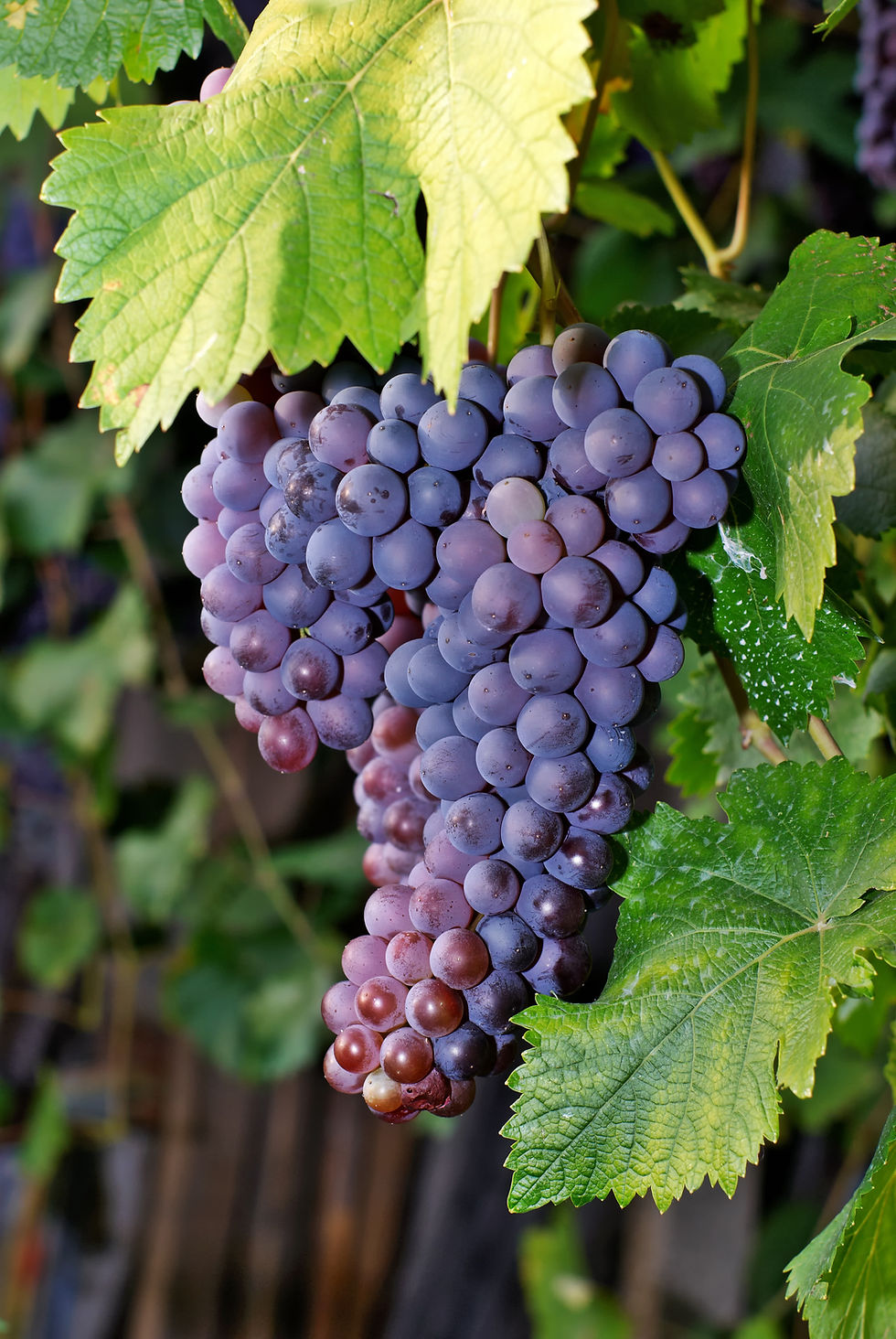
November 7th is a day to celebrate the Merlot grape and wine.
Merlot is a dark blue-colored wine grape, the name of which is thought to be a diminutive of merle, the French name for the blackbird. Its softness, combined with its earlier ripening, makes Merlot a popular grape for blending with Cabernet Sauvignon, though it now stands on its own as a popular varietal.
Along with Cabernet Sauvignon, Cabernet Franc, Malbec and Petit Verdot, Merlot is one of the primary grapes used in Bordeaux wine and the most widely planted grape in the Bordeaux wine regions and elsewhere.
While Merlot is made across the globe, there tends to be two main styles. The "International style" tends to emphasize late harvesting to gain ripeness and produce the inky, purple colored wines that are full-bodied, with a high alcohol content and lush, velvety tannins with intense, plum and blackberry fruit notes.
The traditional "Bordeaux style" harvests the grapes earlier to maintain acidity and producing more medium-bodied wines with moderate alcohol levels that have fresh, red fruit flavors (raspberries, strawberries) and leafy, vegetal notes.
In the late 1990s, researchers at University of California, Davis showed that Merlot is an offspring of Cabernet Franc and is a half-sibling of Carménère, Malbec and Cabernet Sauvignon. The identity of the second parent of Merlot was discovered later through DNA analysis to be from vines growing in an abandoned vineyard in Saint-Suliac in Brittany.
Interestingly, the 2004 film, "Sideways" measurably impacted the consumption of Merlot and led to a phenomenon now known as the "Sideways Effect."
The film follows two men in their forties, Miles Raymond (Paul Giamatti), a depressed teacher and unsuccessful writer and Jack Cole (Thomas Haden Church), a past-his-prime actor, who take a week-long road trip to Santa Barbara County (California) wine country to celebrate Jack's upcoming wedding.
Throughout the film, Miles speaks fondly of the red wine varietal Pinot Noir, while emphatically denigrating Merlot. Following the film's U.S. release in October 2004, Merlot sales dropped 2% while Pinot Noir sales increased 16% in the Western United States. A similar trend occurred in British wine outlets.
A 2009 study by Sonoma State University (in the heart of Northern California wine country) found that though the film temporarily slowed the growth in Merlot sales volume and caused its price to fall, its main effect on the wine industry was an overall rise in the sales volume and price of Pinot Noir, and in overall wine consumption.
By designer Carol A.L. Martin, this tartan celebrates the hues of grapes, leaves, and vines.
To read the study detailing the "Sideways Effect," click the Merlot grapes.