


INDEPENDENCE
Click THE TARTAN FOR REGISTRY INFORMATION IF AVAILABLE
CLICK THE PICTURE FOR MORE INTERESTNG INFORMATION!
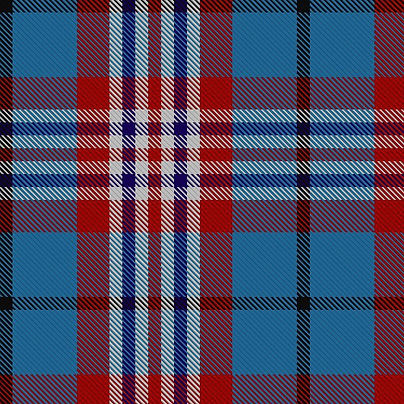

U.S. Post Office
Stan Burch
Postal Act of 1792
Feb 20
“The Congress shall have Power…
To establish Post Offices and post Roads"
~ Article I, Section 8, Clause 7: U.S. Consitution, 1788
On February 20, 1792, President George Washington signed the Post Office Act into law, transforming America’s wartime mail system into a permanent national institution. Rooted in Article I, Section 8 of the Constitution — which grants Congress the power “to establish Post Offices and post Roads” — the Act made communication a constitutional responsibility of the federal government. Its impact on democracy was profound: it protected the privacy of personal correspondence, guaranteed the regular flow of information across state lines, dramatically expanded postal roads into rural communities, and subsidized the widespread circulation of newspapers so citizens could stay informed about public affairs. In a young republic wary of centralized power, the postal system became a unifying civic infrastructure — binding distant states together through reliable, protected communication.
The U.S. Post Office Tartan honors that woven network of roads, letters, and ideas that helped secure informed self-government in the early United States. ❤️ 🤍 💙 🇺🇸 ✉️ ✉️ ✉️


George Washington's Mount Vernon
Robert Paterson
George Washington's Birthday
Feb 22
"Washington at Princeton"
~ tartan inspiration painting by Charles Willson Peale, 1779
George Washington (1732–1799) was the first President of the United States (1789–1797) and a key figure in the American Revolution. As commander-in-chief of the Continental Army, he led the colonies to victory against British forces, securing American independence.
Known for his leadership, integrity, and steadfast commitment to republican ideals, George Washington set crucial precedents for the new nation, including the voluntary two-term presidency. Before his presidency, he was a Virginia planter and military officer who led the Continental Army to victory in the Revolutionary War. Yet perhaps his most profound act of leadership was not military triumph or political authority, but restraint. At the end of the war, when many expected him to assume sweeping power—and some even suggested he become a monarch—Washington resigned his commission and returned to private life at Mount Vernon, Virginia. In doing so, he deliberately rejected the model of kingship that had dominated European history and affirmed that in a republic, authority flows from the people and is not held for life.
Days after the Continental Army’s surprise victory at Trenton, New Jersey, General George Washington decided to execute another daring maneuver to confront the British at Princeton on January 3, 1777. The resulting victory boosted American morale and inspired many recruits to join the Continental Army the following spring.
The colours of this unique tartan were inspired by Charles Willson Peale’s painting portraying General Washington after the Battle of Princeton. The design blends the hues of Washington’s distinctive uniform. In this tartan, each thread is intended to be a brushstroke, inspired by Peale’s brush and the indomitable spirit of Washington’s triumph.
So, Happy Birthday, George! And why not mark this date with a slice of cherry pie — a sweet tribute to the famous (if apocryphal) tale of young Washington bravely declaring, “I cannot tell a lie,” after taking a hatchet to his father’s cherry tree. 💙 🤎 🤍 ❤️ 🇺🇸 🎂
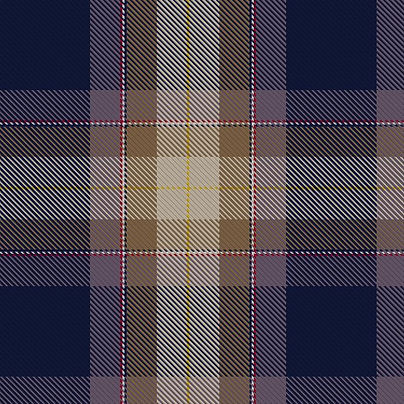

Free and the Brave
Jeffrey Renson
National Anthem Day
Mar 3
"🎵 O say can you see, by the dawn's early light,
What so proudly we hailed at the twilight's last gleaming,
Whose broad stripes and bright stars through the perilous fight,
O'er the ramparts we watched, were so gallantly streaming?
And the rocket's red glare, the bombs bursting in air,
Gave proof through the night that our flag was still there;
O say does that star-spangled banner yet wave
O'er the land of the free and the home of the brave?"
~ The Star Spangled Banner, words by Francis Scott Key (1814)
Music by John Stafford Smith
“The Star-Spangled Banner” began as a poem written during the War of 1812. In September 1814, British forces bombarded Fort McHenry in Baltimore Harbor. An American lawyer, Francis Scott Key, watched the attack from a British ship where he was being held temporarily. At dawn, he saw the large American flag still flying over the fort, signaling that the United States had not surrendered. Inspired, he wrote a poem titled “Defence of Fort M’Henry.”
Key’s poem was soon set to the tune of a popular British song, “To Anacreon in Heaven,” written by John Stafford Smith. The melody was already well known, which helped the song spread quickly across the country. Over time, it became known as “The Star-Spangled Banner.”
Throughout the 19th century, the song gained popularity at patriotic events and military ceremonies. In 1916, President Woodrow Wilson ordered that it be played at official occasions. Finally, in 1931, Congress passed a law making it the official national anthem of the United States, signed by President Herbert Hoover. 💙 🤍 ❤️ 💛 🎶 🇺🇸

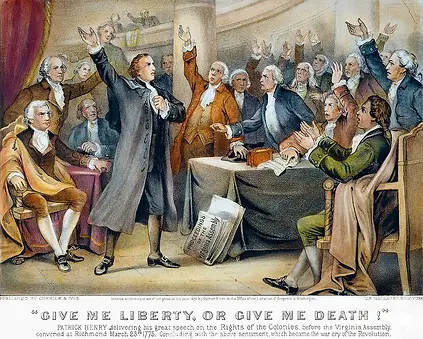
Heritage of Liberty
Brice Lythgoe
Patrick Henry Day
Mar 23
“There is no longer any room for hope.
If we wish to be free… we must fight!
I repeat it, sir, we must fight!
An appeal to arms and to the God of Hosts is all that is left us!
…Is life so dear, or peace so sweet, as to be purchased at the price of chains and slavery?
Forbid it, Almighty God!
I know not what course others may take;
but as for me, give me liberty or give me death!”
~ Patrick Henry, March 23, 1775. Second Virginia Convention
Patrick Henry was one of the most powerful voices of early American resistance — not a soldier or general, but a lawyer, politician, and electrifying speaker whose words could sway an entire room. Born in 1736 in colonial Virginia, he first rose to prominence arguing against British authority in court, most famously in the Parson’s Cause case, where he challenged the Crown’s interference in colonial affairs. By the 1770s, he had become a leading advocate for colonial rights and a fierce critic of British rule, known for his boldness and emotional, persuasive style. He would later serve as the first elected governor of Virginia after independence.
When Henry delivered his famous speech in 1775, it was given at the Virginia Convention in Richmond — not as a formal, recorded address, but as a live, impassioned appeal to fellow delegates. At that time, speeches were not routinely transcribed word-for-word, especially in political gatherings. There were no stenographers present, and much of the power of such speeches lay in their delivery — tone, gesture, and timing — rather than exact wording.
The version we know today was reconstructed decades later by William Wirt in 1817, based on recollections from people who had been there. By then, the speech had already become legendary, and Wirt aimed to capture its spirit and impact.
The Heritage of Liberty tartan was designed to commemorate the 250th anniversary of the founding of the United States and the ties between Scotland and America. The design is intended to reflect continuity, resilience, and shared heritage, acknowledging the influence of Scottish people and traditions on early American settlement, civic life, and concepts of self-governance.
The colours are intended to represent shared historical significance: blue for endurance; buff for the land itself and as a reference to its historical use in early American military dress; red for courage & sacrifice; white for balance and clarity and yellow, representing gold, for prosperity and the future. 💙 ❤️ 🤎 💛 🤍 🇺🇸 🏴


Scottish American Diaspora
Steven Patrick Sim
Tartan Day
Apr 6
"The fair have sighed for it,
The brave have died for it,
Foeman have sought for it,
Heroes fought for it,
Honour the name of it,
Drink to the fame of it,
The Tartan!"
~ Murdoch MacLean, The Tartan
Happy Tartan Day! For many, tartan isn’t just something worn—it’s something carried. Across generations, across oceans, across time. A thread that connects glens and cities, past and present, memory and identity.
Celebrated most prominently in Canada and the United States (and to a lesser extent in other parts of the Scottish diaspora), Tartan Day honors Scottish heritage, identity, and cultural contributions around the world.
Marked by parades, pipe bands, Highland dancing, and community gatherings—from ceilidhs to Scottish society events—it’s a day to proudly wear a favorite tartan and celebrate the enduring legacy of Scotland far beyond its borders.
Inspired by Prickly Thistle in the Scottish Highlands—the only tartan weaving mill in the region—this design was created with the Scottish diaspora in mind. It’s intended for Americans of Scottish descent and their descendants, reflecting a shared heritage that stretches back centuries.
Large-scale emigration from Scotland to North America began in the 1700s, particularly after the Battle of Culloden, when traditional clan structures were broken apart. Many Scots crossed the Atlantic in search of new opportunities, settling in the thirteen colonies—especially in areas like South Carolina and Virginia.
The tartan’s design thoughtfully merges sett elements from two earlier creations by the same designer: Declaration of Scottish Independence, Arbroath 1320 and Old Glory (1824).
The result is a striking blend of symbolism—bringing together the red, white, and blue of the American Stars and Stripes with the blue and white of the Scottish Saltire, Scotland’s national flag. ❤️ 🤍 💙 🇺🇸 🇬🇧 🎉


Daughters of the American Revolution
Dina Farkas
the Battle of Concord and Lexington
Apr 19
"By the rude bridge that arched the flood,
Their flag to April’s breeze unfurled,
Here once the embattled farmers stood
And fired the shot heard round the world.
The foe long since in silence slept;
Alike the conqueror silent sleeps;
And Time the ruined bridge has swept
Down the dark stream which seaward creeps.
On this green bank, by this soft stream,
We set today a votive stone;
That memory may their deed redeem,
When, like our sires, our sons are gone.
Spirit, that made those heroes dare
To die, and leave their children free,
Bid Time and Nature gently spare
The shaft we raise to them and thee."
~ Concord Hymn, Ralpha Waldo Emerson, 1837
One of several vintage and new tartans featured this year for the 250th anniversary of the United States.
The Battles of Lexington and Concord, which ignited the American Revolutionary War, began with gunfire on April 19, 1775.
The exact person who fired the first shot on Lexington Green remains unknown, but this action triggered open combat between British troops and the colonial militia, symbolizing the onset of the colonies' struggle for independence from British rule.
These clashes were not only the first major military engagements of the war but also culminated in an American victory that significantly boosted militia support for the anti-British cause. The battles occurred across several locations in Middlesex County, Province of Massachusetts Bay, including Lexington, Concord, Lincoln, Menotomy (now Arlington), and Cambridge, marking the start of armed conflict between the Kingdom of Great Britain and the Patriot militias of America's thirteen colonies.
Of the many women who played significant roles during this period, Sybil Ludington, known as the female Paul Revere, Sybil, at only 16 years old, rode 40 miles to alert American militia of British troop movements. Her courageous ride through Putnam County, NY, helped assemble militia forces to fight in the Battle of Danbury in Connecticut!
The Daughters of the American Revolution (DAR), founded in 1890, is dedicated to preserving the history and legacy of those who supported American independence during the American Revolutionary War. In keeping with the broader tradition of commemorative tartans, the DAR has an associated tartan design that reflects both patriotism and heritage, typically incorporating shades of red, white, and blue to echo the American flag.❤️ 🤍 💙 🇺🇸

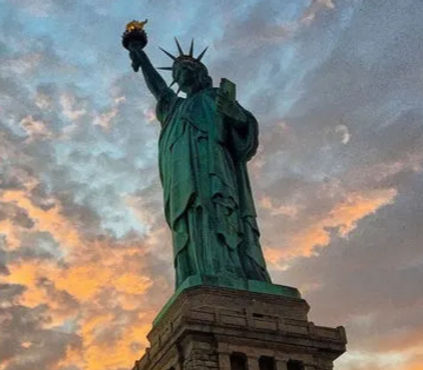
Statue of Liberty
Jeffrey Renson
Liberty Enlightening the World Day
Jun 17
"Not like the brazen giant of Greek fame,
With conquering limbs astride from land to land;
Here at our sea-washed, sunset gates shall stand
A mighty woman with a torch, whose flame
Is the imprisoned lightning, and her name
Mother of Exiles. From her beacon-hand
Glows world-wide welcome; her mild eyes command
The air-bridged harbor that twin cities frame.
“Keep, ancient lands, your storied pomp!” cries she
With silent lips. 'Give me your tired, your poor,
Your huddled masses yearning to breathe free,
The wretched refuse of your teeming shore.
Send these, the homeless, tempest-tost to me,
I lift my lamp beside the golden door!'”
~ The New Colossus, Emma Lazarus, 1883
On June 17, 1885, the Statue of Liberty—officially titled Liberty Enlightening the World—arrived in New York Harbor as a gift of friendship from France to the United States. Shipped across the Atlantic in more than 200 crates and later reassembled on Bedloe's Island (now Liberty Island), the statue would be dedicated the following year in 1886. Today, Lady Liberty remains one of the world's most recognizable symbols of freedom, democracy, and hope for new beginnings.
Designed by French sculptor Frédéric Auguste Bartholdi, with engineering assistance from Gustave Eiffel, the statue was presented by the people of France to celebrate the enduring friendship between the two nations and their shared commitment to liberty. Bartholdi is believed to have drawn inspiration from classical depictions of Libertas, the Roman goddess of freedom, while the statue's face may have been modeled after his mother, Charlotte Bartholdi, giving Lady Liberty both a symbolic and personal connection.
This tartan draws its inspiration from the Statue of Liberty and the remarkable story it tells. The light brown reflects the statue's original copper colour when it was first unveiled, while the green and light green shades represent the natural process of patination that gradually transformed the copper surface into the familiar green hue seen today. Red, white, and blue honour the flags of both the United States and France, celebrating the friendship between the two nations. The design also incorporates meaningful thread counts: the light brown contains 18 threads and the large light green area 86 threads, together commemorating the year of the statue's dedication in 1886.
Even before the Statue of Liberty arrived in New York Harbor in June 1885, excitement was building on both sides of the Atlantic. In 1883, as efforts were underway to raise funds for the statue's pedestal, poet Emma Lazarus contributed her sonnet The New Colossus to a charitable art auction supporting the project. In 1903, sixteen years after Lazarus's death in 1887, her words were permanently honored with a bronze plaque installed inside the Statue of Liberty, ensuring that her message would become part of the statue's enduring legacy. 💚 🤎 ❤️ 🤍 💙 🇺🇸 🗽 🗽 🗽


Thomas Jefferson - 1776
Robert Paterson
Declaration of Independence Proposal
Jun 28
"When in the Course of human events, it becomes necessary for one people to dissolve the political bands which have connected them with another, and to assume among the powers of the earth, the separate and equal station to which the Laws of Nature and of Nature's God entitle them, a decent respect to the opinions of mankind requires that they should declare the causes which impel them to the separation."
~ Declaration of Independence, July 4, 1776
June 28, 1776 is recognized as "Declaration Day", the day the Committee of Five—primarily Thomas Jefferson, with revisions from Benjamin Franklin and John Adams—submitted the completed draft of the Declaration to the Second Continental Congress. On July 4, 1776 – Congress approved the final wording of the Declaration; Independence Day.
Thomas Jefferson was born in 1743 in the Colony of Virginia and grew up to become one of the most influential figures of the American Revolution. Trained as a lawyer, he was known for his keen intellect, wide-ranging interests, and elegant writing. Jefferson was deeply influenced by the ideas of the Enlightenment, particularly the writings of John Locke and other philosophers who argued that individuals possess natural rights and that governments derive their authority from the consent of the governed. By 1776, he was 33 years old and already recognized as one of Virginia's most promising political thinkers.
Jefferson's growing reputation as a defender of colonial rights led to his election to the Second Continental Congress in Philadelphia in 1775. Although he was not a frequent speaker, his thoughtful arguments and exceptional writing skills quickly earned the respect of his fellow delegates. When Congress decided that a formal declaration of independence was needed, a Committee of Five was appointed to prepare the document. The committee consisted of Thomas Jefferson, John Adams, Benjamin Franklin, Roger Sherman, and Robert R. Livingston. Adams, recognizing Jefferson's literary talent, strongly urged him to write the first draft.
Working largely alone in a rented room in Philadelphia during June 1776, Jefferson composed the initial draft of what became the Declaration of Independence. He then shared it with John Adams and Benjamin Franklin, who reviewed the document and suggested revisions before it was presented to Congress. Franklin's edits helped sharpen some of the language, while Adams provided both encouragement and practical advice. After further debate and amendments by Congress, the Declaration was adopted on July 4, 1776. Its stirring assertion that all people are endowed with certain unalienable rights, including life, liberty, and the pursuit of happiness, has since become one of the most enduring statements of liberty and self-government in history. ❤️ 🤍 💙 🇺🇸 🇺🇸 🇺🇸 ✍️


Liberty's Accord
Curious and Unusual Tartans
the Great Debate of July 1, 1776
Jul 1
"The jaws of power are always opened to devour, and her arm is always stretched out, if possible, to destroy the freedom of thinking, speaking and writing."
~ John Adams, A Dissertation on the Canon and Feudal Law (1765)
On June 7, 1776, Richard Henry Lee introduced the resolution declaring "that these United Colonies are, and of right ought to be, free and independent States." While a committee including Thomas Jefferson, John Adams, Benjamin Franklin, Roger Sherman, and Robert R. Livingston prepared the Declaration of Independence, Congress postponed the decisive vote.
When debate opened on July 1, independence was far from certain. John Dickinson of Pennsylvania, one of Congress's most respected delegates, urged reconciliation, warning that independence would make every signer guilty of high treason. The principal reply came from John Adams. Although Jefferson would become the Declaration's principal author, Adams became its foremost advocate. With reason, eloquence, and unwavering conviction, he argued that after Lexington and Concord, Bunker Hill, and the King's rejection of the Olive Branch Petition, reconciliation was no longer possible.
The vote remained perilously close, and Congress postponed its decision until the following day, allowing time for divided colonies to reconsider. On July 2, Lee's resolution finally passed. Two days later, Congress approved Jefferson's Declaration.
This tartan honors not merely the birth of American independence, but the freedom that made it possible. The defining moment was not unanimous agreement, but the willingness to hear opposing voices, answer them with reason, and persuade rather than compel. John Adams' greatest gift was not simply defending liberty—it was demonstrating that liberty is strongest when dissent is protected and truth is allowed to prevail through open debate.
The Colours: The charcoal gray forms the foundation of the sett, representing the uncertainty in which every great decision for liberty must be made and the common ground where competing ideas are tested through open debate; the fine black lines recall the shadow of consequence that lay over the delegates on July 1, 1776, when every man who spoke knew that failure could mean charges of high treason, reminding us that free speech has always demanded courage; the broad burgundy bands symbolize principled conviction—the willingness to speak for liberty despite opposition and personal risk; the corresponding deep navy bands represent honorable dissent, recognizing that disagreement is not the enemy of a free society but one of its greatest safeguards, for ideas become stronger when they may be openly challenged; the white lines signify truth, integrity, and reasoned discourse, reminding us that honest debate seeks understanding rather than victory; and the gold lines represent the priceless liberty of free speech itself—the enduring freedom that allows every voice to be heard, every argument to be tested, and every consensus to be earned rather than imposed.
Liberty's Accord reminds us that the preservation of freedom depends not upon the absence of disagreement, but upon the enduring courage to defend every citizen's right to think, to speak, and to persuade. 💙 🤍 ❤️ 🧡 🖤 🇺🇸


Voices of Liberty
Curious and Unusual Tartans
Patriot Days
Jul 2
“Whoever would overthrow the liberty of a nation must begin by subduing the freeness of speech.”
~ Benjamin Franklin (1705-1790)
Although Benjamin Franklin is forever associated with the stirring declaration, "Whoever would overthrow the liberty of a nation must begin by subduing the freeness of speech," the idea itself has much deeper roots. It grew from the intellectual flowering of the seventeenth and eighteenth centuries known as the Enlightenment, when philosophers and political writers increasingly argued that governments derived their legitimacy from the consent of the governed and that reason, open debate, and the free exchange of ideas were essential to a just society.
Among the most influential voices was the English poet John Milton, whose 1644 work Areopagitica condemned censorship and defended the freedom to publish and debate ideas, believing that truth is strengthened—not weakened—when it is openly tested. Later, the philosopher John Locke developed the principles of natural rights, limited government, and liberty that profoundly shaped both the American and French Revolutions. These ideas were echoed and expanded by the authors of Cato's Letters, widely read in the American colonies, who warned that the first step toward tyranny is almost always the suppression of criticism and dissent.
Franklin absorbed these currents of thought as a young printer and writer. At just sixteen years of age, writing under the pseudonym Silence Dogood, he distilled this rich intellectual tradition into one of the clearest expressions of an idea that had been developing for generations.
One of a collection of tartans from the Liberty Series, this design celebrates one of the cornerstones of a free society: the ability to speak openly, to exchange ideas, and to let differing voices be heard. Throughout history, freedom of expression has often proved to be among the first liberties challenged—and one of the hardest to protect throughout each new generation.
Colours symbolize: Blue – for freedom, openness, and the boundless sky, reflecting the limitless possibilities of expression. Stone White – representing truth, clarity, and the freedom to communicate without fear. Gold – symbolizing the priceless value of free speech, a liberty worthy of protection. White – also reflecting resilience in the face of censorship and silence. Red – representing the courage to speak, resilience in the face of censorship and silence, and the sacrifices made by those who defended the right to do so. ❤️ 🤍 💙 🧡 🇺🇸


Unknown Patriot
Curious and Unusual Tartans
Patriot Days
Jul 3
“In the beginning of a change the patriot is a scarce man, and brave, and hated and scorned. When his cause succeeds, the timid join him, for then it costs nothing to be a patriot.”
~ Mark Twain (1835-1910)
Samuel Langhorne Clemens (1835–1910), better known by his pen name Mark Twain, was one of America's greatest authors, humorists, and social critics. Best remembered for The Adventures of Tom Sawyer and Adventures of Huckleberry Finn, Twain combined wit with a sharp moral conscience, often challenging hypocrisy, injustice, and blind conformity.
One of a collection of tartans from the Liberty Series, this design draws its inspiration from Mark Twain's enduring observation that true patriotism is measured by courage rather than popularity.
Deep Indigo Blue represents steadfast conviction—the quiet resolve of those who remain faithful to principle even when they stand alone. It is the colour of constancy rather than celebration.
Natural Oatmeal reflects the common citizen and the homespun values Twain so admired: honesty, independence, and the ordinary people from whom genuine change so often begins. Its muted warmth also evokes aged paper, recalling the written word and Twain's lifelong defence of free thought.
White symbolizes truth and integrity. Running throughout the sett, it reminds us that enduring principles provide the framework upon which liberty rests, even when they are unpopular.
Red represents the courage and sacrifice required to defend liberty, suggesting that patriotism is demonstrated through conviction and action rather than loud display. ❤️ 🤍 🤎 💙 ✍️ 🇺🇸
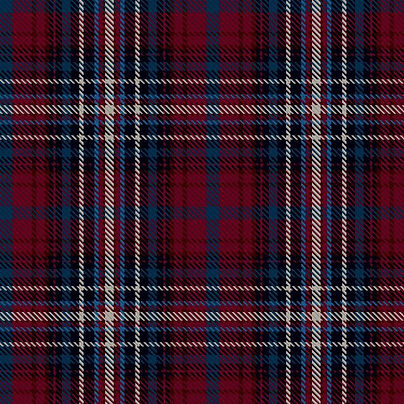

America 250
Kaci McEwan
Independence Day
Jul 4
"And for the support of this Declaration, with a firm reliance on the protection of divine Providence, we mutually pledge to each other our Lives, our Fortunes and our sacred Honor."
~ Closing words of the Declaration of Independence, July 4, 1776
This tartan was designed to celebrate the 250th anniversary of the United States and the long, intertwined history shared by Scotland and America. Its colours combine elements of both the American and Scottish flags, reflecting the enduring cultural, political, and personal connections that have linked the two nations for centuries.
Accent colours within the sett honour two remarkable Scots who signed the Declaration of Independence: James Wilson and John Witherspoon. Born in Scotland before emigrating to America, Wilson became one of the most influential legal minds of the founding era, later helping to draft the United States Constitution and serving as one of the first Associate Justices of the Supreme Court. Witherspoon, a Presbyterian minister and president of the College of New Jersey (now Princeton University), was the only active clergyman to sign the Declaration and played a pivotal role in educating many future American leaders. Their inclusion serves as a reminder of the important contributions made by Scottish immigrants to the creation of the United States.
The design also incorporates significant dates and symbols from America's journey to independence, including 1607, when the first permanent English settlement was established at Jamestown; the thirteen colonies that would eventually unite in rebellion; and the Fourth of July, marking the day in 1776 when the Continental Congress adopted the Declaration of Independence. Together, these elements create a tartan that celebrates not only America's founding, but also the Scottish influence woven into its history. ❤️ 🤍 💙 🇺🇸 🇺🇸 🇺🇸 🏴 ✍️


American Bi-Centennial
Jamie Scarlett MBE
Independence Day
Jul 4
"And for the support of this Declaration, with a firm reliance on the protection of Divine Providence, we mutually pledge to each other our Lives, our Fortunes and our sacred Honor."
~ The Declaration of Independence, In Congress, July 4th, 1776
The famous painting "Declaration of Independence" by John Trumbull painting is sometimes incorrectly described as depicting the signing of the Declaration of Independence. The painting shows the five-man drafting committee presenting their draft of the Declaration to the Congress, an event that took place on June 28, 1776, formally adopted on July 4th. Trumbull painted many of the figures in the picture from life, and visited Independence Hall to depict the chamber where the Second Continental Congress met. This 12 x 18 ft oil-on-canvas work was commissioned in 1817, purchased in 1819, and placed in the United States Capitol rotunda in 1826. The painting shows 42 of the 56 signers of the Declaration; Trumbull originally intended to include all 56 signers but was unable to obtain likenesses for all of them. In the tartan, where the lighter stripes cross each other in the dark blue, there is an effect of the stars of the American flag. The thirteen alternate red and white stripes appear in the full sett of the tartan. Happy Birthday, United States! ❤️ 🤍 💙 🇺🇸 🎆


Atlantic Alliance
David McGill
Independence Day
Jul 4
The people of America are now in a situation which has never occurred before since the world began."
~ Adam Smith, 1776
The American Revolution was shaped by many influences—English constitutional traditions, colonial experience, classical learning, and the ideas of the European Enlightenment. Among these, the Scottish Enlightenment played a distinctive role.
Thinkers such as Adam Smith, David Hume, Francis Hutcheson, and Thomas Reid explored questions of liberty, government, morality, and the rights of individuals, ideas that were widely read and discussed in the American colonies. Several Founding Fathers, including Thomas Jefferson, James Madison, James Wilson, and John Witherspoon, drew upon this rich intellectual tradition as they debated the principles that would guide a new nation. As Adam Smith observed, "Man is an animal that makes bargains," reflecting a belief in voluntary cooperation, individual liberty, and the power of free people to govern themselves.
This tartan commemorates both the achievement of American independence and the broader exchange of ideas that helped make it possible. Its threadcount incorporates the symbolic sequence 07-04-17-76-13, representing July 4, 1776, and the thirteen colonies that declared themselves free and independent states. The design also recalls the extraordinary commitment made by the signers of the Declaration of Independence, who concluded their document not merely with a statement of principle but with a solemn pledge to one another. In the closing words of the Declaration, they mutually bound themselves in common cause, pledging “our Lives, our Fortunes and our sacred Honor.” ❤️ 🤍 💙 🇺🇸 🇺🇸 🇺🇸 🏴


Fireworks
Carol A.L. Martin
Independence Day
Jul 4
Boom! Boom!
Bang! Bang!
Crackle! Crackle!
Whistle!
During the American Revolution, the Second Continental Congress led the way for the encouragement of fireworks on the Fourth of July by authorizing a display on July 4, 1777, in Philadelphia, a year after the signing of the Declaration of Independence. At night there was a grand exhibition of fireworks, which began and concluded with thirteen rockets on the commons! But even before the Declaration of Independence was signed, founding father John Adams envisioned fireworks as a part of the festivities. In a letter to his wife, Abigail Adams, on July 3, 1776, he wrote that the occasion should be commemorated “with Pomp and Parade, with Shews, Games, Sports, Guns, Bells, Bonfires and Illuminations from one End of this Continent to the other from this Time forward forever more.” Happy Independence Day, United States! 🎆🇺🇸


Lands of Liberty
Amanda Payne
Independence Day
Jul 4
"🎵 My Country, 'Tis of Thee
"My country, 'tis of thee,
Sweet land of liberty,
Of thee I sing..."
~ My Country, 'Tis of Thee, Samuel Francis Smith, 1831
Special relationships between countries and kin have long shaped the journeys of people who have called more than one nation home. Lands of Liberty was created to celebrate the three countries in which its designer has lived as a citizen: the United Kingdom, Canada, and the United States. Its colours—pillar-box red, white, delft blue, and bright sky blue—draw inspiration from the flags of all three nations, blending their shared heritage into a single design. The tartan serves as a tribute to the ideals of freedom, opportunity, and democratic tradition that connect these countries across the Atlantic. By weaving together the colours of the designer's three homelands, Lands of Liberty reflects a personal journey of citizenship, belonging, and gratitude for the liberties enjoyed in each of these nations.❤️ 🤍 💙 🇺🇸 🇬🇧 🇨🇦


Old Glory
Steven Patrick Sim
Independence Day
Jul 4
"Ev'ry heart beats true 'neath the Red, White and Blue,
Where there's never a boast or brag.
But should auld acquaintance be forgot,
Keep your eye on the grand old flag."
~"Grand Old Flag", George M. Cohan (1906)
On June 14, 1777, the Second Continental Congress passed the Flag Resolution which stated: "Resolved, That the flag of the thirteen United States be thirteen stripes, alternate red and white; that the union be thirteen stars, white in a blue field, representing a new constellation." This tartan was inspired by the first American flag to be nicknamed "Old Glory". Owned and named by the 19th-century New England sea captain William Driver (1803 -1886), the original 24 star flag, made in 1824, passed into legend and bequeathed its name to all American flags. The colours and geometry are all significant, including the following: red for hardiness and valour; white symbolizing purity and innocence; blue representing vigilance, perseverance and justice; and 13 alternating red and white stripes represent the original thirteen British colonies that declared independence from the Kingdom of Great Britain becoming the first states in the Union. 🇺🇸


Star Spangled Banner (Flag of 1814)
Steven Patrick Sim
Independence Day
Jul 4
"🎶 O, say, does that
Star-Spangled Banner yet wave
O'er the land of the free
And the home of the brave?"
~ "The Star Spangled Banner", Francis Scott Key, 1814
The Star-Spangled Banner, or the Great Garrison Flag, was the garrison flag that flew over Fort McHenry in Baltimore Harbor during the naval portion of the Battle of Baltimore during the War of 1812. The flag was commissioned by the fort's commander, Major George Armistead, who specified a "flag so large that the British would have no difficulty seeing it from a distance." Seeing the flag flying over Fort McHenry on the morning of September 14, 1814, after the battle ended, Francis Scott Key was inspired to write the poem "Defence of Fort M'Henry". These words were set to the tune of "To Anacreon in Heaven", a popular song at the time, by John Stafford Smith, and by 1931 the song became the national anthem of the United States! Happy Independence Day, United States! 🇺🇸 🎆 🎉 🎈


United States
Malcolm Campbell
Independence Day
Jul 4
"🎶 Oh, say can you see,
By the dawn's early light,
What so proudly we hailed
At the twilight's last gleaming,
Whose broad stripes and bright stars,
Thru the perilous fight,
O'er the ramparts we watched
Were so gallantly streaming?
And the rockets red glare,
The bombs bursting in air,
Gave proof through the night
That our flag was still there.
O, say, does that
Star-Spangled Banner yet wave
O'er the land of the free
And the home of the brave?"
~ "The Star Spangled Banner", National Anthem of the United States
Happy Independence Day, United States! 🇺🇸 🎆 🎉 🎈


White House Historical Association
Blair Urquhart
Opening of the White House
Nov 1
“The stone masons of Scotland today are the legacy of great craftsmen from the 18th century who came to Washington and created the beautiful carvings that we still see on the White House. The Double Scottish Rose that we see on every pilaster is a Scots wink from those stonemasons…”
~ Stewart McLaurin (President, White House Historical Association) on the Double Scottish Rose (2018)
James Hoban’s 1792 neoclassical design, inspired by Georgian symmetry, has weathered fire, reconstruction, expansion, and modernization. From its rebirth after the War of 1812 to Theodore Roosevelt’s streamlined renovation and Harry Truman’s complete structural overhaul, the White House has proven both adaptable and enduring—its original sandstone frame now reinforced with steel to meet the needs of a modern presidency.
Over time, the balance between public funding and private patronage has shaped its transformation. Congress typically handled the bones and beams, while First Families and private donors have tended to its interior life. Jacqueline Kennedy’s 1961 restoration, financed largely through private support, sparked the creation of the White House Historical Association—a bridge between stewardship and style. Each generation since has added its own layer of vision and care to this national symbol.
That tradition continues today with plans for a new 90,000-square-foot ballroom near the East Wing—one of the most ambitious additions in decades. Entirely funded by private donors and projected to exceed $200 million, the project carries Hoban’s neoclassical ideals into a new era of grandeur, history and patronage once again.
The White House Historical Association tartan, designed in 2019, paid tribute to the Scottish stonemasons whose craftsmanship helped raise the Executive Mansion. Its colors echo key chapters of the house’s interior story: blue for the Bellangé furniture of the Blue Room installed in 1817 under President James Monroe; green for the Green Room he decorated the following year; red for the luxurious silks of the Red Room furnished during James Polk’s 1845 administration; grey for the Scottish stonework and its “Double Scottish Rose”; and white, of course, for the White House itself..💙 ❤️ 🤍 💚 🌹 🌹 🏴 🇺🇸