


Click the tartan to view its entry in The Scottish Registers of Tartans which includes registration details, restrictions, and registrant information.
Unregistered tartans may link to one of the web's online design environments for similar information.
For any questions about reproduction of designs or weaving of these tartans, please contact the registrant directly or via this website.
National Anthem Day
"🎵 O say can you see, by the dawn's early light,
What so proudly we hailed at the twilight's last gleaming,
Whose broad stripes and bright stars through the perilous fight,
O'er the ramparts we watched, were so gallantly streaming?
And the rocket's red glare, the bombs bursting in air,
Gave proof through the night that our flag was still there;
O say does that star-spangled banner yet wave
O'er the land of the free and the home of the brave?"
~ The Star Spangled Banner, words by Francis Scott Key (1814)
Music by John Stafford Smith
“The Star-Spangled Banner” began as a poem written during the War of 1812. In September 1814, British forces bombarded Fort McHenry in Baltimore Harbor. An American lawyer, Francis Scott Key, watched the attack from a British ship where he was being held temporarily. At dawn, he saw the large American flag still flying over the fort, signaling that the United States had not surrendered. Inspired, he wrote a poem titled “Defence of Fort M’Henry.”
Key’s poem was soon set to the tune of a popular British song, “To Anacreon in Heaven,” written by John Stafford Smith. The melody was already well known, which helped the song spread quickly across the country. Over time, it became known as “The Star-Spangled Banner.”
Throughout the 19th century, the song gained popularity at patriotic events and military ceremonies. In 1916, President Woodrow Wilson ordered that it be played at official occasions. Finally, in 1931, Congress passed a law making it the official national anthem of the United States, signed by President Herbert Hoover. 💙 🤍 ❤️ 💛 🎶 🇺🇸

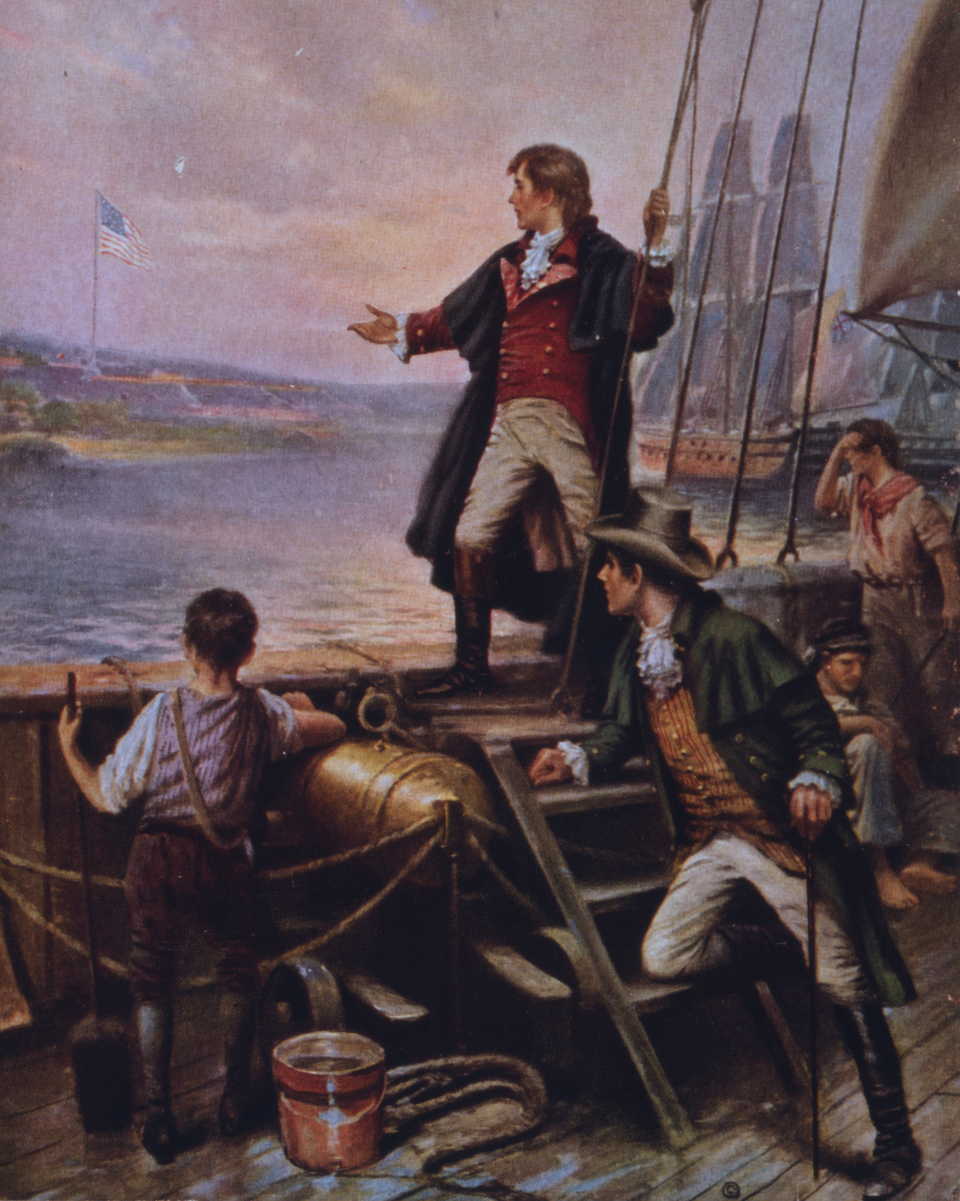
Unlike many national anthems that grew out of revolutions or royal courts, The Star-Spangled Banner began as a poem written during a specific military moment. In 1814, Francis Scott Key watched the British bombard Fort McHenry during the War of 1812 and was moved not by victory in battle, but by a flag still standing at dawn. Many anthems celebrate triumph or independence outright; the American anthem instead dramatizes suspense — Will the flag still be there? It is cinematic, almost narrative in structure, describing rockets, bombs, and the fragile hope of morning light.
Musically, it is unusual. The melody comes from a British club song, To Anacreon in Heaven, written by John Stafford Smith. That borrowed tune gives the anthem a wide vocal range — over an octave — making it far more difficult to sing than many others. Compare this with God Save the King, which moves stepwise and comfortably within a narrow range, or O Canada, which was composed intentionally as a dignified singable hymn. The American anthem demands dramatic leaps and sustained high notes; it feels closer to an operatic aria than a communal folk song.
In tone, too, it differs. La Marseillaise is openly revolutionary and martial, urging citizens to arms with fiery intensity. Deutschlandlied (today sung only in its third stanza) emphasizes unity and justice. By contrast, the American anthem focuses on endurance and resilience — not “we conquered,” but “we survived the night.” It is less about ideology and more about symbol: a flag visible through smoke.
Another distinction is poetic structure. The anthem is filled with vivid imagery — “rocket’s red glare,” “bombs bursting in air.” Few anthems linger so visually on a single scene. Many are structured as direct addresses to the homeland (“O Canada!”) or invocations of divine protection (“God save…”). The American anthem asks a question repeatedly — “O say, does that star-spangled banner yet wave?” The drama lies in the uncertainty, resolved only at the end of the stanza.
Perhaps most interesting is its late official adoption. Though written in 1814, it was not declared the national anthem until 1931. By then it had already become culturally entrenched through military bands, schools, and public ceremonies. Its endurance came not from easy melody or political decree, but from emotional association.
In comparison to many national anthems, then, The Star-Spangled Banner is theatrical, vocally demanding, and story-driven — a snapshot of one anxious night that somehow came to symbolize an entire nation.
For more on its history, click the illustration!