


Click the tartan to view its entry in The Scottish Registers of Tartans which includes registration details, restrictions, and registrant information.
Unregistered tartans may link to one of the web's online design environments for similar information.
For any questions about reproduction of designs or weaving of these tartans, please contact the registrant directly or via this website.
Magical Mists of May Day
"🎶 The mist of May is in the gloamin', and all the clouds are holdin' still,
So take my hand and let's go roamin' through the heather on the hill."
~ The Heather on the Hill, Brigadoon, Lerner and Loewe, 1947
This lovely ballad from 1947’s Brigadoon by Alan Jay Lerner and Frederick Loewe remains one of the enduring jewels of the Golden Age of Musical Theater. Still beloved today, it continues to appear in Broadway revivals, regional productions, and as a favourite for high schools and colleges alike, enchanting new generations with its misty Highland romance and memorable score.
The fantasy begins when two American tourists wandering the Scottish Highlands stumble upon Brigadoon, a mysterious village hidden from the modern world which appears for only one day every hundred years. Suspended almost outside of time itself, the village offered audiences an idealized vision of Scotland filled with heather-covered hills, tartans, romance, music, and tradition.
The original stage production was especially notable for the choreography of renowned dancer and choreographer Agnes de Mille, who incorporated elements inspired by traditional Scottish dance into the show. These included a Highland sword dance, lively chase scenes, reels, and a solemn funeral dance sequence that helped give the production much of its distinctive Scottish atmosphere. Although dance remained central to the stage version, several of these numbers did not survive into the final cut of the lavish 1954 film adaptation starring Gene Kelly and Cyd Charisse — though rumours of missing footage and deleted dance sequences have circulated among theatre and film enthusiasts for decades.
By the 1960s, the term “brigadooning” and its variants had begun appearing in social commentary and criticism, often used to describe an overly romanticized or sentimental view of Scotland and Highland culture. Yet despite such critiques, Brigadoon had an undeniable cultural impact. In the years following the Second World War, both the play and film helped fuel a tremendous international enthusiasm for tartan, “fashion plaids,” Highland imagery, and Scottish ancestry. For many audiences — particularly in North America — Brigadoon became part of a broader post-war fascination with Scotland that helped spark renewed interest in Scottish music, dance, genealogy, and romantic Highland imagery that still echoes today. 💜 ❤️ 💛 💙 🤍 🎭 🎶 ⚔️

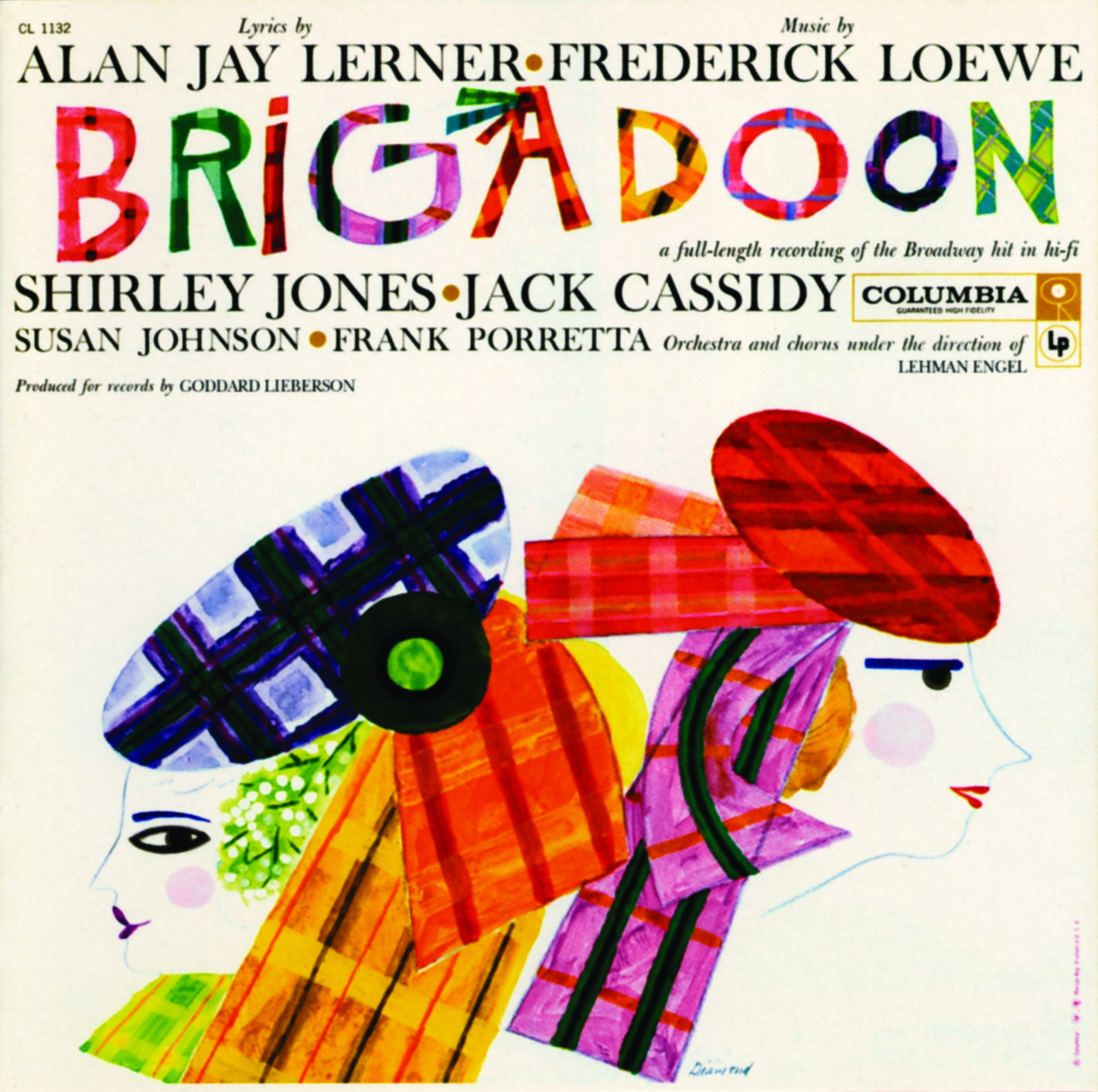
Today marks the premiere of the Broadway musical "Brigadoon" which opened in 1947 and ran for 581 performances.
One of several tartans for fictional places, the Brigadoon tartan is linked to the namesake play from the golden age of theater, with music and lyrics by Lerner and Lowe, and choreography by Agnes DeMille.
Brigadoon tells the story of Americans Tommy Albright and Jeff Douglas, on a hunting vacation in Scotland, who discover a quaint and beautiful village, Brigadoon. Strangely, the village is not on any map, and soon Tommy and Jeff find out why: Brigadoon is an enchanted place. It appears once every hundred years for one day, then disappears back into the mists of time, to wake up to its next day a century later. When Tommy falls in love with Fiona, a girl of the village, he realizes that she can never be part of his life back in America. He wonders if he could be part of hers in Brigadoon.
Most people are familiar with the 1954 movie version with Cyd Charisse and Gene Kelly; however, you may also remember a different TV version from 1966 that included amongst other music and scenes not included in the film version, a sword dance performed by ballet dancer, Edward Villella.
Designed by David McGill, this was originally designated as the Scottish Institute of Sport tartan but renamed in 2003.
Click the Broadway poster for more about the original stage play.