


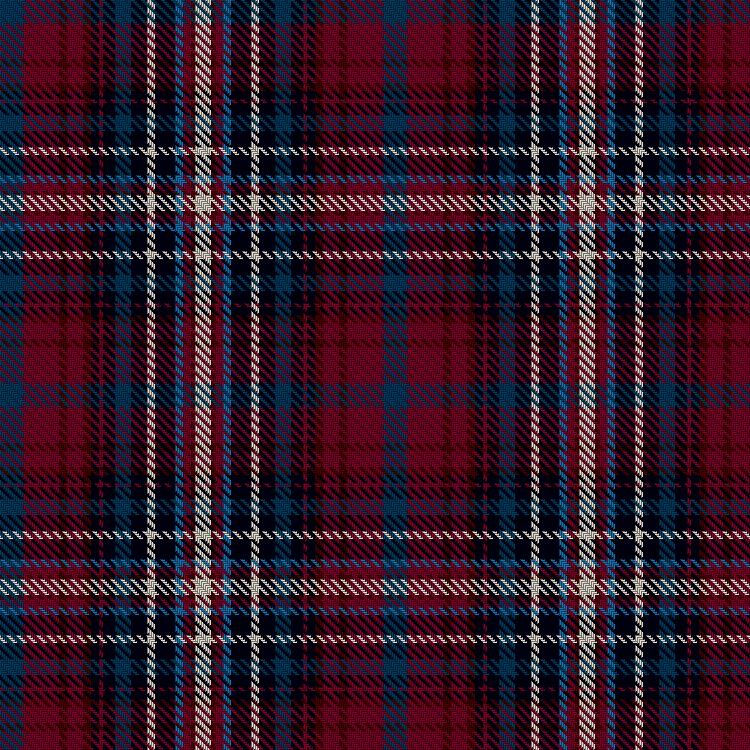

Click THE TARTAN FOR REGISTRY INFORMATION IF AVAILABLE
CLICK THE PICTURE FOR MORE INTERESTNG INFORMATION!

Whisky & Tea
Gordon Kirkbright
Hot Toddy Day
Jan 11
"Being moderately taken, it slows the age, cuts phlegm, helps digestion, cures the dropsy, it heals the strangulation, keeps and preserves the head from whirling, the tongue from lisping, the stomach from womblying, the guts from rumbling, the hands from shivering, the bones from aching…and truly it is a sovereign liquor if it be orderly taken."
~ Chronicles of England, Ireland, and Scotland, 1577
Cough, cough, achoo! Fighting off a cold or flu? Hot whisky and tea in a Hot Toddy might be just the thing to make you feel better. Generally believed to be of Scottish origin, the classic hot toddy combines whisky with herbs or tea, warming spices, sugar or honey, and a squeeze of lemon.
Modern research suggests that even without all the sweet and spicy additions, whisky itself may have antiviral, anti-cancer, anti-aging, and other medicinal properties. Long before the scientists weighed in, people were already turning to it for comfort and cure.
Some food historians believe the Hot Toddy was originally devised to disguise the flavor of raw Scotch, often enhanced with sugar, dates, saffron, mace, nuts, and cinnamon. By the 19th century in Britain, however, it had gained such a reputation that doctors routinely prescribed a Hot Toddy for nearly everything—from stomach aches to insomnia.
Even during Prohibition in 1920s America, whisky retained its “medicinal” status and could still be legally imported and prescribed by a physician (wink, wink).
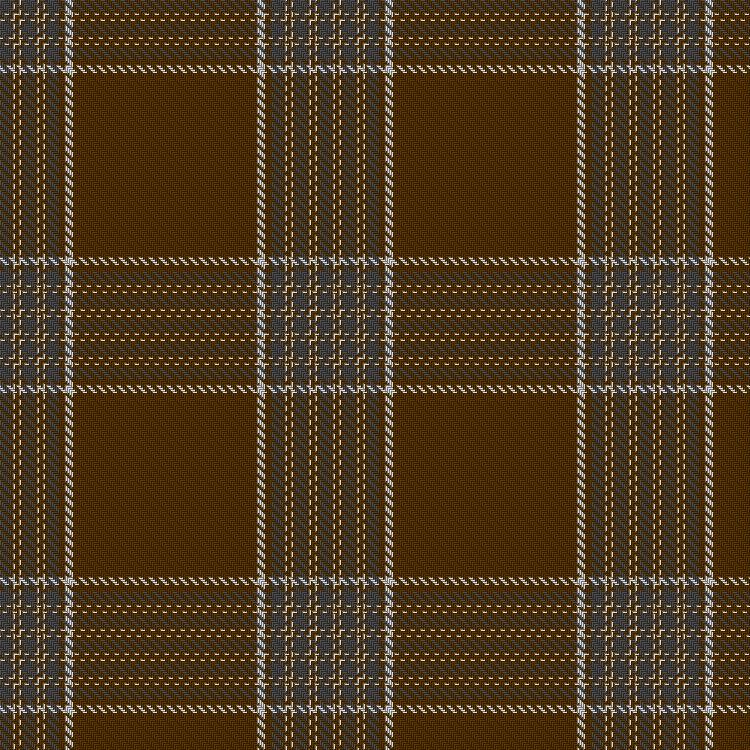
Designed for the Outlander television series, this tartan references the show’s two central figures: Claire, the English time-traveler and tea drinker, and Jamie, the Scottish romantic hero and Jacobite, firmly associated with whisky. Both beverages feature prominently in the story as drink and metaphor alike—described, consumed, and occasionally smuggled. Sip, sip—Sláinte! 🤎 💛 🤍 💙 🥃 🌿 🍋 🍯 🐝


Anama Chaillte (Lost Soul)
Outlander Day
Jun 1
“Now this one is about a man out late on a fairy hill on the Eve of Samhain who hears the sound of a woman singing sad and plaintive from the very rocks of the hill. ‘I am a woman of Balnain. The folk have stolen me over again, ‘the stones seemed to say. ‘I stood upon the hill, and wind did rise, and the sound of thunder rolled across the land. I placed my hands upon the tallest stone and traveled to a far, distant land where I lived for a time among strangers who became lovers and friends. But one day, I saw the moon came out and the wind rose once more. So I touched the stones and traveled back to my own land and took up again with the man I had left behind.”
~ Jamie Fraser, translating to Claire, the song and tale “Bean Tighearna Bhail’ ‘n Athain” or “The Woman of Balnain” , Outlander, 1991
One of a collection of tartans created specifically for the historical time traveling television series Outlander (based on the namesake novel), the Anama Chaillte tartan was inspired by both the scenery and the characters of this Jacobite romance. The story follows married World War II nurse Claire Randall who in 1945 finds herself transported back to 1743 Scotland, where she encounters dashing Highland warrior and outlaw Jamie Fraser and becomes embroiled in the Jacobite risings. The title song is an adaptation of Robert Louis Stevenson's poem "Sing me a Song of a Lad that is Gone" set to the tune of the Scottish folk song "The Skye Boat Song". This popular series is responsible for the latest resurgence of interest in heritage tartans , tweeds, and laces, as established and emerging Scottish designers look to reference and source Scottish textiles and trims for modern interpretations of kilts and tartan.

Blood of My Blood
Ingles Buchan
Outlander Day
Jun 1
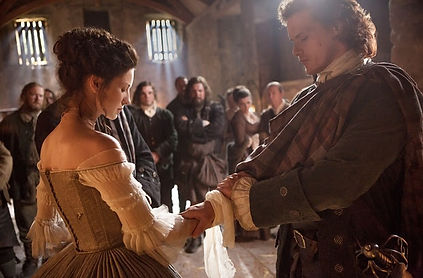
"Ye are Blood of my Blood, and Bone of my Bone. I give ye my body, that we Two might be One. I give ye my spirit, 'til our life shall be done."
~ Claire and Jamie's Wedding Vows, Outlander
The Outlander series, both in Diana Gabaldon’s best-selling novels and the popular television adaptation, is renowned for its sweeping blend of historical drama, romance, and time travel. The story follows Claire Beauchamp, a 20th-century English nurse who is mysteriously transported back to 18th-century Scotland, where she becomes entangled in the political unrest leading up to the Jacobite risings—and falls in love with Highland warrior Jamie Fraser.
This rich-coloured tartan, the latest of a series of tartans created for the television series Outlander, is one to watch for in the upcoming release. The series was filmed in Scotland.
One of the most iconic moments in the series is their wedding, marked by the intimate and powerful vow, “Blood of my blood, bone of my bone.” Though not taken verbatim from historical sources, this phrase is inspired by ancient Celtic handfasting rituals and traditional Gaelic expressions of unity and fidelity. It reflects the series’ deep emotional core while evoking a sense of historic authenticity. As the story unfolds across centuries—from the Scottish Highlands to colonial America—the vow resurfaces, anchoring Claire and Jamie’s bond through war, separation, and the pull of time itself. With the final season of the TV adaptation set to air later 2025, fans are preparing to say farewell to a series that has masterfully intertwined love, history, and the enduring mystery of time travel. 🤎 ❤️ 💛 🤎 💒 💍 ⚔️ ⌛ ⏳


Caitriot
Outlander Day
Jun 1


Honour & Redemption
Kirkbright, Gordon GK Textiles Ltd
Outlander Day
Jun 1
"And if your life is a suitable exchange for my honor, why is my honor not a suitable exchange for your life?”
~ Outlander, Diana Gabaldon, 1991
The designer of this tartan was inspired by the themes of the Outlander TV series. "Outlander," an ongoing television series based on Diana Gabaldon's novels, follows Claire Fraser, a 20th-century nurse who is mysteriously transported to 18th-century Scotland. As she navigates this unfamiliar world, Claire encounters Jamie Fraser, a Highland warrior bound by a strong sense of honor and duty to his clan. Their relationship is tested by the brutalities of the time, but Jamie's unwavering commitment to his principles often leads him to seek redemption for past misdeeds. His journey is mirrored by Claire's own struggle to reconcile her modern values and sensibilities along with her knowledge of historical events as a person living in the times past. Together, they confront the harsh realities of war, betrayal, and loss. In the current timeline of "Outlander" Season 7, having survived the Jacobite uprisings, Jamie and Claire Fraser contend with the conflict leading up to the American Revolutionary War. Having settled inNorth Carolina, where they must protect their family and allies while dealing with the tumultuous events of the era. Simultaneously, their daughter and her husband, also time travelers, adjust to life in the 1980s! 🏴 🇺🇸 ⌛


Mist & Stone
Outlander Day
Jun 1
"What if your future was the past?"
Are you a fan of this historical time-traveling romance genre? In Diana Gabaldon's fictional Outlander series, recently translated from novel to an ongoing television series. In this story, Claire Randall, a former field nurse on her second honeymoon with her husband in Scotland following World War II, visits Craigh na Dun, a prehistoric stone circle near Inverness, and falls through a time portal in the stones—and into the 18th century during the Jacobite uprisings! Although Craigh na Dun is a fictional stone circle, installed on location in Kinloch Rannoch, Perthshire, there are other similar locations which exist in Scotland said to have inspired those used in Outlander. The Callanish standing stones, located on the Isle of Lewis in Scotland's Outer Hebrides archipelago, are 5000 years old and associated with ritualistic activity for at least 2000 years. While the reason for erecting the Callanish standing stones has always been a mystery, in December of 2019 a group of archeologists shared a new theory that the circle's pattern may have been inspired by a massive lightning strike! 📚 ⏳ 🏴


Outlander
Gordon Kirkbright
Outlander Day
Jun 1
"🎶 Sing me a song, of a lass that is gone.
Say, could that lass be I?
Merry of soul she sailed on a day
Over the sea to Skye."
~ The Skye Boat Song (Outlander Theme Song lyrics)
Of the many available Scottish-themed romance novels, the Outlander novels (and television series) stand above for their devoted cult following. The recent television series, with its inspired casting and marvelous costuming has been responsible for the "Outlander Effect" a resurgence of interest in Scottish history, culture, and fashion. The oft-used term in this series, "Sassenach" is Gaelic for “Outlander” or “English" and refers to Claire Randall, the novel's narrator and heroine. Both the Irish Sasanach or Gaelic Sasunnach (derived from the Gaelic Sasunn and Old English Seaxan, Saxon) have been historically and pejoratively used as a mild oath to describe an English person, foreigner, or even a Lowland Scot! However, the Outlander novels and series have succeeded in also making it a playful and intimate term of endearment, particularly used by Highlander Jamie towards Claire in scenes and dialogue which make Highland, Lowland, and Sassenach hearts flutter everywhere! This tartan is one of several designed for use in the television series. 📚 🎥 🍿