


FAMOUS
Click THE TARTAN FOR REGISTRY INFORMATION IF AVAILABLE
CLICK THE PICTURE FOR MORE INTERESTNG INFORMATION!


Double Elvis Gallery
Birthday Elvis Presley
Jan 8
"I think I have something tonight that's not quite correct for evening wear. Blue suede shoes." ~ Elvis Presley
If one Elvis is good, then two Elvises must be even better! Though he’ll forever be associated with Memphis, Tennessee, home to his Graceland mansion, Elvis Presley was a born in Tupelo, Mississippi, on January 8, 1935. It was there that Presley began to sing and play guitar, sometimes even bringing the instrument to school to play gospel music for his classmates. Elvis Presley's Scottish roots have been traced back to the village of Lonmay, Aberdeenshire. According to genealogists, blacksmith Andrew Presley of Lonmay had a son called Andrew who emigrated to New Bern, North Carolina at the time of the Jacobite uprisings (1745/46). This tartan, created for the Double Elvis Gallery, an art gallery in Stockholm, serendipitously includes some of Elvis' favourite colours, black, baby blue (as in suede shoes), and red! One of three tartans referencing the "King of Rock 'n Roll", this tartan was inspired by the 1963 Andy Warhol exhibit which included silkscreens of multiple images of Elvis Presley in cowboy attire from one of his movie roles, silkscreened over a silver background! If you're an Elvis fan, this tartan might be just the thing if you kilt up with some of those blue suede shoes! 🏴 🎸 🎤
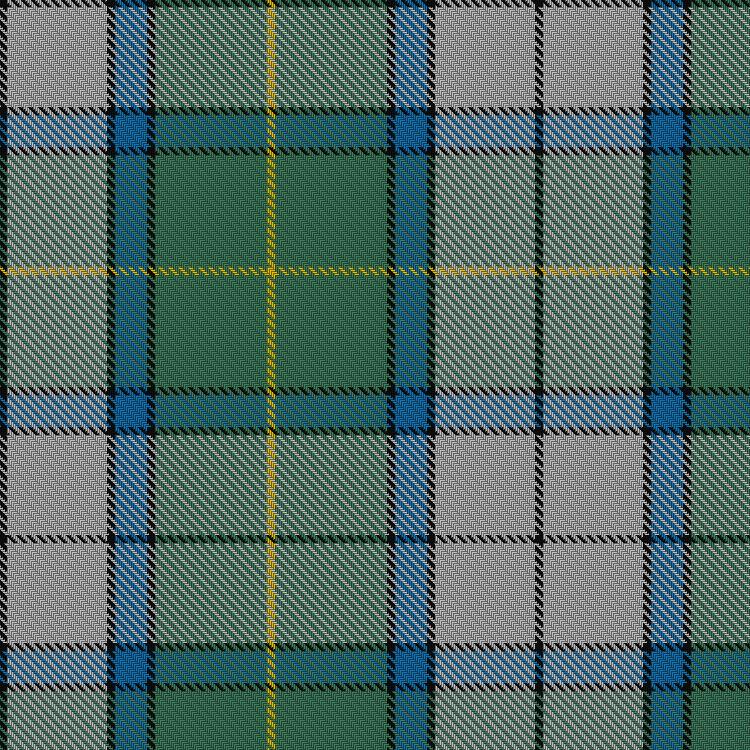

Presley of Lonmay
Michael King
Birthday Elvis Presley
Jan 8
“🎶 You ain't nothin' but a Hound Dog,
Cryin' all the time.
Well, you ain't never caught a rabbit and you ain't no friend of mine"
~ "Hound Dog," recorded 1956 by Elvis Presley (1935-1977)
Elvis Presley, born today in 1935 in Tupelo, Mississippi, achieved worldwide recognition through his hit recording of "Hound Dog" in 1956. Elvis made his band record 31 takes of the song, over several hours, until he was satisfied with the right version. In the end, Presley chose version 28, declaring: "This is the one.” The song had already been a blues hit for Big Mama Thornton in 1953 and with many different covers, is now deemed one of the best-selling singles of all time! Elvis's family had always claimed Scottish roots, and Scottish roots which were confirmed by research in 1987, tracing back to blacksmith, Andrew Presley, who lived in the village of Lonmay, Aberdeenshire., along with other Presleys in nearby New Deer, Old Deer and Tarves. Andrew Presley's son emigrated to America roughly near the times of the Jacobite uprisings. Interestingly, Elvis Presley's one visit to the UK was at Prestwick Airport, Scotland in 1960, after finishing his American Army National service! He stopped over in Ayrshire for two hours to great fanfare! When asked by a reporter if he would ever perform in Scotland, Elvis said: “I kind of like the idea of Scotland. “I’m going to do a European tour and it would be nice to come back here.” Alas, he never made it back and died in 1977 at the age of 42. The "King of Rock Roll" lives on through the legacy of his many hits, movies, and as the best-selling solo music artist of all time. 👑 💽 🏴 🇺🇸


Presley of Memphis
Birthday Elvis Presley
Jan 8
"I think I have something tonight that's not quite correct for evening wear. Blue suede shoes."
~ Elvis Presley
Elvis Presley, forever linked with Memphis, Tennessee, and his iconic Graceland mansion, was actually born in Tupelo, Mississippi, on January 8, 1935. It was in Tupelo that the young Elvis first began singing and playing guitar, often bringing his instrument to school to share gospel music with his classmates. Yet, the roots of the "King of Rock 'n' Roll" stretch far beyond Mississippi—to the village of Lonmay in Aberdeenshire, Scotland!
Genealogists trace his lineage to Andrew Presley, a blacksmith from Lonmay, whose son Andrew emigrated to New Bern, North Carolina, during the Jacobite uprisings of 1745–46. In celebration of Elvis's heritage, this tartan has been designed incorporating his favorite colors: black, baby blue (a nod to his famous suede shoes), pink, and gold—symbolizing his 90 gold records, the most of any recording artist. Companion tartans, Presley of Lonmay and Presley of Lonmay (Modern), further honor the Scottish origins of this legendary performer. 🖤 💙 💗 🤍 💛 🎸 🎤


Joe Strummer Commemorative
Kenneth Graham
International Clash Day
Feb 7
"🎵 Darling, you got to let me know
Should I stay, or should I go?
If you say that you are mine
I'll be here till the end of time
So you got to let me know
Should I stay, or should I go?"
~ Should I Stay or Should I Go, The Clash, 1982
You'll be noticed coming or going in this retro Rock 'N Roller inspired tartan should you kilt up with a punk attitude!
International Clash Day is KEXP radio created annual celebration of the music and message of the The Clash, the an English rock band formed in London in 1976 as a key player in the original wave of British punk rock whose philosophy is that music could (and should) still mean something politically and socially.
Channel your inner punk for "the only band that mattered" with this dark and industrial coloured tartan, conceived to commemorate the 60th anniversary of the birth of Joe Strummer (John Graham Mellor). The colours reflect those used in the production of audio cassette tape. Interestingly, the cassette tape format is undergoing a sort of revival for artists who prefer to release on this type of media as well as digitally.
Some of their hits include:
* London Calling
* Rock the Casbah
* Should I Stay or Should I Go
* Train in Vain
* White Riot
* Clampdown
* The Guns of Brixton
* I Fought the Law
* Straight to Hell
* Spanish Bombs
Got a favorite? 🤎 🖤 💛 🧡 📻 📼 📼 📼


Rob Roy
Traditional
Rob Roy MacGregor
Mar 7
"A famous man is Robin Hood,
The English ballad-singer's joy!
And Scotland has a thief as good,
An outlaw of as daring mood;
She has her brave Rob Roy!"
~ William Wordsworth, Memorials of a Tour in Scotland, 1803
Baptised on March 7, 1671, Raibeart Ruadh MacGregor, more famously known as Rob Roy, was a Scottish outlaw from the Highlands often referred to as the Scottish Robin Hood.
Tales of his exploits made him both a figure of notoriety and respect. In an era when cattle rustling and the trade of protection against such thefts was common in the Scottish Highlands, Rob Roy carved a niche for himself as a respected cattleman. His ambition to expand his cattle herd led him to borrow a significant sum of money. However, when his chief herder, entrusted with the money to purchase cattle, vanished without a trace, he was left unable to repay his debts.
This misfortune branded him an outlaw, and saw his wife and family cruelly evicted and their home at Inversnaid razed to the ground. The seizure of his lands by his principal creditor, James Graham, the 1st Duke of Montrose, spurred Rob Roy into a relentless private blood feud against the Duke, a conflict that persisted until 1722 when he was compelled to surrender.
Following his imprisonment, Rob Roy was eventually pardoned in 1727, a testament to the complex layers of his character. He died in his house at Inverlochlarig Beg, Balquhidder, in 1734, aged 63.
While the Rob Roy tartan—also known as MacGregor Red and Black or Old MacGregor—is widely associated with the famous outlaw, there is no contemporary evidence that Rob Roy MacGregor himself wore it. The earliest visual evidence for the distinctive red-and-black check appears in a portrait of Lord Mungo Murray (c.1680), which shows black-and-red diced hose. Similar patterns also appear in several mid-18th-century portraits from the Jacobite period, including those of David, Lord Ogilvy (1745) and other Highland figures.
These portraits suggest that this red-and-black check was a widely worn Highland pattern rather than one uniquely connected with Rob Roy, and the association with his name likely developed later during the 19th-century romantic revival of Highland dress. ❤️ 🖤 ❤️ ⚔️ 🐂 🐂 🐂


Hitchcock
unknown
Hitchcock Day
Mar 12
"One final thing I have to do… and then I’ll be free of the past."
~ John ‘Scottie’ Ferguson, Vertigo, 1958
Alfred Hitchcock, renowned as "The Master of Suspense," crafted some of cinema's most unforgettable and spine-chilling scenes. Over his six-decade career, Hitchcock's influence extended beyond the screen; he became a household name through his frequent interviews, iconic cameos, and the popular TV series "Alfred Hitchcock Presents" (1955–1965). His innovative contributions to film, including the "Hitchcockian" style which uses camera movement to simulate a person's gaze and framing shots to heighten suspense, earned his films a total of 46 Oscar nominations and six wins, solidifying his legacy in the annals of cinematic history. The title sequence of Alfred Hitchcock's "Vertigo" which inspired this tartan, is a masterpiece of visual design and a landmark in the history of cinema, created by the graphic designer Saul Bass. It opens with an extreme close-up of a woman's face, then zooms into her eye, through which the audience is plunged into a swirling maelanage of spirals and abstract patterns. These hypnotic, swirling motifs perfectly encapsulate the themes of obsession, disorientation, and the psychological depth that the film explores. Bass's use of innovative animation techniques, coupled with Bernard Herrmann's hauntingly beautiful score, creates an atmosphere of suspense and unease from the very beginning. This sequence not only sets the tone for the movie but also represents a significant moment in film history, where the title sequence became an integral part of the film's storytelling and artistic expression. Saul Bass's work on "Vertigo" is widely regarded as one of the greatest title sequences of all time! 🧡 💜 🤍 📽️ 🎞️ 🎬 🍿 👁️


Purple Rain
David McGill
Purple Day
Mar 26
"🎶 I never meant to cause you any sorrow
I never meant to cause you any pain
I only wanted to one time to see you laughing
I only wanted to see you
Laughing in the purple rain."
~ Purple Rain, Prince and The Revolution, 1984
From lavender to lilac, periwinkle to plum, today is the perfect day to wear purple—or to try your hand at some playful purple alliteration! How about: “The Purpled-Plaided Piper of Perth Pranced Past Pitlochry!"
The colour purple has long been associated with royalty and nobility. Its regal status dates back to ancient times, beginning with the famed Phoenician dye known as Tyrian Purple. This luxurious dye, extracted from the spiny dye-murex sea snail, was incredibly costly to produce, making it a symbol of wealth and power. Roman magistrates, Byzantine emperors, Holy Roman emperors, and Roman Catholic bishops all favoured this rare hue—until supply shortages forced bishops to adopt scarlet instead.
Throughout the centuries, purple remained a highly restricted colour. Sumptuary laws governed its use, and by the 4th century CE, only the Roman emperor himself was allowed to wear Tyrian purple. Children born to reigning emperors were given the special title porphyrogenitos, meaning "born in the purple."
That exclusivity changed in 1856, thanks to a happy accident by eighteen-year-old British chemistry student William Henry Perkin. While attempting to synthesize quinine, he instead created the first synthetic aniline dye—a brilliant purple shade he called mauveine. The industrial production of purple had begun, and mauve quickly took the fashion world by storm.
One modern icon forever linked with the colour was Prince Rogers Nelson—simply known as Prince. The legendary American artist was a masterful multi-instrumentalist and a pioneer of the Minneapolis sound, blending funk rock, synth-pop, and new wave. His tribute tartan, named after his iconic 1984 anthem “Purple Rain”, features his signature hue. Fittingly, purple is also the colour for Epilepsy Awareness Day (also known as Purple Day)—a cause close to Prince’s heart, as he suffered from the condition during childhood. 💜 🤍 💜 🤍 💜 🌧️ 🎶 🎗️ 🎸

Lawrence's Seven Pillars of Khaki
Theresa Jenkins-Teague
T.E. Lawrence
May 19
"All men dream, but not equally. Those who dream by night in the dusty recesses of their minds, wake in the day to find that it was vanity: but the dreamers of the day are dangerous men, for they may act on their dreams with open eyes, to make them possible."
~ T. E. Lawrence, Seven Pillars of Wisdom: A Triumph, 1926
Colonel T.E. Lawrence—British/Welsh archaeologist, army officer, diplomat, and writer—rose to fame for his pivotal role in the Arab Revolt (1916–1918) and the Sinai and Palestine Campaign (1915–1918) against the Ottoman Empire during World War I. Though later known to the world as "Lawrence of Arabia," he spent his final years living in relative obscurity under an assumed name, serving as a Royal Air Force mechanic. He died on May 19, 1935, following a motorcycle accident.
His most famous work, Seven Pillars of Wisdom, is an autobiographical account of his wartime experiences. The title was borrowed from a pre-war manuscript he had intended to write—a study of seven great cities of the Middle East: Cairo, Smyrna, Constantinople, Beirut, Aleppo, Damascus, and Medina. That original scholarly project was never completed, yet the title endured. Its reuse may have been inspired by John Ruskin’s Seven Lamps of Architecture, the biblical phrase from Proverbs, or a poetic reference in the book’s dedication—possibly crafted in collaboration with war poet and fellow writer Robert Graves.
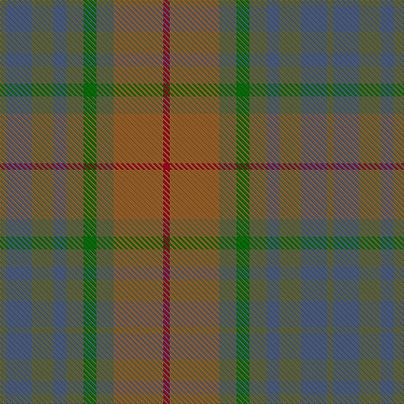
This tartan's design includes diverse elements: the orange brown represents Wadi Rum and Lawrence’s famous raid on Aqaba as well as the warm internal hues and tones of Clouds Hill, Lawrence’s secluded Dorset retreat. Red represents Lawrence’s birthplace at Tremadoc and his Welsh ancestry. The cross of Saint George is contrived in the sett to demonstrate Lawrence’s admiration for ‘Richard the Lionheart’ and his thesis on Crusader Castles. Blue and green represent his Irish connections and his two periods of service in the RAF. The sett shows the seven distinct bands of Khaki which pay homage to Lawrence’s literary masterpiece.
Lawrence’s life, marked by brilliance, daring, and complex loyalties, has captivated historians and storytellers alike. A master tactician and a formative thinker in guerrilla warfare, he remains an enduring figure of legend and mystery.🧡 💙 💚 ❤️ 🤎 🐪 🐪 🐪 📚


King Pootatau Te Wherowhero
Michael Ross
the Maori Kings of New Zealand
Jun 25
"There is but one eye of the needle
through which the white, red and black threads must pass.
Hold fast to the law, hold fast to faith, hold fast to love
Forsake all else!"
~ Pōtatau Te Wherowhero, c. 1860
Pōtatau Te Wherowhero was a renowned Māori warrior and leader of the Waikato iwi (tribes), remembered today as the first Māori King and founder of the Te Wherowhero royal dynasty. (His son, King Tāwhiao, would succeed him as the second Māori King and become one of the most recognisable figures of the Kīngitanga through the famous portraits painted by Gottfried Lindauer.)
During the early 1850s, a movement arose to establish a Māori monarch who could unite the various iwi, provide a counterpart to the authority of Queen Victoria, and, most importantly, help resist the growing alienation of Māori land under the colonial government. The search for a suitable king eventually centred on Pōtatau. Though advanced in age and initially reluctant to accept the role, he agreed at Rangiriri in April 1857 and was formally installed at Ngāruawāhia in June 1858. His reign lasted just two years, ending with his death on June 25, 1860, after which he was succeeded by his son, Tāwhiao.
This tribute tartan honours his legacy in the blue and gold colours of the Kīngitanga (Māori monarchy). The gold stripes represent the seven great waka (canoes) that carried the ancestors of the Māori people across the Pacific Ocean to Aotearoa (New Zealand) during the great migrations of the thirteenth century. 🧡 💙 🤍 🧡 👑 🌿 🇳🇿


Flora MacDonald (portrait)
Prince Charlie & Flora MacDonald set sail
Jun 27
"Speed bonny boat like a bird on a wing,
Onward the sailors cry.
Carry the lad that’s born to be King,
Over the sea to Skye.”
~ The Skye Boat Song, Sir Harold Boulton, 1884 lyrics to an existing air
Inspired by a portrait in the Fort William Museum, this tartan commemorates one of the most legendary moments in Jacobite history—June 27, 1746—the dramatic escape of Bonnie Prince Charlie after the Battle of Culloden, aided by the brave and resourceful Flora MacDonald.
Disguised as “Betty Burke,” an Irish spinning maid, the fugitive Prince departed the island of Benbecula in a small boat manned by six oarsmen, with Flora and a small party accompanying him. Rather than heading to the mainland, they sailed to the Isle of Skye, landing at Kilmuir at the place now called Rudha Phrionnsa—Prince’s Point.
After a tense night hidden in a cottage, the group traveled overland to Portree. There, Charles was able to arrange further passage—though not directly to Raasay, but ultimately continuing his escape through a series of island hops, eventually reaching France in September 1746.
Flora MacDonald (1722–1790), a member of the Macdonalds of Sleat, has been immortalized in story and song for her courageous act. Though her family supported the government during the 1745 Jacobite Rising, Flora later explained that she helped Charles Edward Stuart out of compassion rather than political loyalty. She secured travel permission from her stepfather—who was, ironically, the commander of the local militia—carefully concealing the Prince's identity and true purpose of the journey.
Following the escape, Flora was arrested and imprisoned in the Tower of London (not just taken to London) before being released in 1747 under the Act of Indemnity. Far from being reviled, she was widely admired for her dignity and bravery. It is reported that she even received a visit from Frederick, Prince of Wales.
Flora later married Allan MacDonald of Kingsburgh, and in 1774 the couple emigrated to North Carolina. Loyal to the British Crown during the American War of Independence, Allan served with the Loyalist forces, and the couple suffered the confiscation of their property. After the war, they returned to Scotland.
Her legacy lives on in music and dance: in 1884, Sir Harold Boulton penned The Skye Boat Song, a romantic ballad evoking her moonlit voyage with the Prince. Around the same period, the graceful Highland dance Flora MacDonald’s Fancy began appearing in programs—an enduring tribute to one of Scotland’s most beloved heroines. ❤️ 💙 💚 👑 🚣


Over the Sea to Skye
Prince Charlie & Flora MacDonald set sail
Jun 27
"Speed bonny boat like a bird on a wing,
Onward the sailors cry.
Carry the lad that’s born to be King,
Over the sea to Skye.”
~ The Skye Boat Song, Sir Harold Boulton, 1884 lyrics to an existing air
Flora MacDonald (1722 – 1790) was a member of the Macdonalds of Sleat, who helped Charles Edward Stuart (Bonnie Prince Charlie) evade government troops after the Battle of Culloden. Though her family supported the government during the 1745 Rising, Flora later claimed to have assisted Charles out of sympathy for his situation. She managed to get permission from her step-father, the commander of the local militia, to travel from Uist to the mainland, accompanied by two servants and a crew of six boatmen. The Prince was disguised as Betty Burke, an Irish spinning maid. They set sail in a small boat from Benbecula on 27th June 1746, not to the mainland but to Skye, landing in Kilmuir at what is today called Rudha Phrionnsa (Prince’s Point). After hiding overnight in a cottage, they made their way overland to Portree where the Prince was able to get a boat to the island of Raasay and from there, passage back to France. Charles is said to have presented Flora with a locket containing his portrait. She was later arrested and sent to London where it was recorded "all admired the dauntless part she had acted, and she had the honour of a visit from Frederick, Prince of Wales". Released under a general amnesty in June 1747, she subsequently married Allan MacDonald and emigrated to North Carolina in 1773. Their support for the British government during the American War of Independence meant the loss of their American estates and they returned to Scotland. In 1884, Sir Harold Boulton produced 'The Skye Boat Song,' followed shortly after by the first performance of the Scottish highland dance "Flora MacDonald's Fancy"!


Runrig
Prickly Thistle Scotland Ltd
Runrig's Farewell Concert
Aug 19
"And I'm still dreaming of the Hebrides
And I'm still leaning on the early years
And I can't help feeling it will always be
The story of the life inside of me"
~Runrig, The Story (English translation)
Formed on the Isle of Skye in 1973, this Scottish Celtic rock band included songwriters Rory Macdonald and Calum Macdonald. During most of the 1980s and 1990s, the band's also included Donnie Munro, Malcolm Jones, Iain Bayne, and Pete Wishart. Munro left the band in 1997 to pursue a career in politics and was replaced by Bruce Guthro. Wishart left in 2001 and was replaced by Brian Hurren. The band released fourteen studio albums, with a number of their songs sung in Scottish Gaelic! The band's name itself, s a reference to a pre–agricultural revolution farming practice, "run rig". Also known as rig-a-rendal, this was a system of land tenure practised in Scotland, particularly in the Highlands and Islands. It was used on open fields for arable farming. 🎵 🔘 🎤 🎸


Blackie
special design, tbd
Poet Day
Aug 21
"A’ falbh an aonaich ag iarraidh chaorach, (Wandering the moor in search of sheep,)
‘S mi cheart cho aotrom ri naosg air lòn, (and I was as light as a snipe on the marsh,)
Gach bot is poll agus talamh toll, (eachc mound, bog and marshy hallow,)
A toirt na mo chuimhne ‘n uair bha mi òg." (bringing to mind my youthful self.)
~ Mary MacPherson (1821-1898)
Attention poets, antiquarians, and art historians! This tartan carries a remarkable story, standing as one of several historic tartans derived from a portrait or photograph. The tartan was reconstructed from a colorized version of a black-and-white photograph of a shawl worn by the Skye poetess Mary MacPherson, famously known as Màiri Mhòr nan Òran (Big Mary of the Songs). Màiri began composing poetry in her 50s and went on to create beautiful Gaelic songs on various subjects, from exile to the fierce fight for crofters’ rights during the Highland Land League movement. A leading voice in this struggle, she became a prominent figure in the battle for justice. Màiri Mhòr formed a close friendship with Professor John Stuart Blackie of Edinburgh University, a Greek language scholar and passionate Scottish nationalist who deeply empathized with Highland life and the crofters’ hardships. Skilled in spinning and wool work, Màiri crafted a tartan plaid for Blackie and later designed a tartan named "The Blackie" in his honor. The Dualchas (Heritage Service for Skye and Lochalsh) suggests that the tartan in the photograph, possibly worn by Màiri herself, may indeed be this design! ❤️ 💚 💙 🤍 💛 ✍️


Diana Memorial Rose
Alistair Buchan
Diana, Princess of Wales
Aug 31
"🎶 Goodbye England's rose,
May you ever grow in our hearts.
You were the grace that placed itself
where lives were torn apart.
You called out to our country,
and you whispered to those in pain.
Now you belong to heaven,
and the stars spell out your name."
~ Goodbye England's Rose/Candle in the Wind, Elton John, 1997
This tartan, which has several colour variations, was designed by Alistair Buchan, Chairman of Lochcarron of Scotland to commemorate the life of Diana Princess of Wales (Jul 1, 1961 - Aug 31, 1997) and to raise money for her many charities. There are also several roses named for Princess Diana in shades ranging from creamy white to delicate pinks. 🌹


Havel
Liberation Kilt Company
Václav Havel Memorial Day
Dec 18
“Without free, self-respecting, and autonomous citizens there can be no free and independent nations. Without internal peace, that is, peace among citizens and between the citizens and the state, there can be no guarantee of external peace.”
~ Vaclav Havel (1936-2011)
According to the designer, anyone who believes that free expression is an essential component of every healthy society is welcome to wear or display the Havel tartan.
The tartan itself portrays an endless succession of prison cell windows, each struck through in red, symbolizing a protest against the persecution and imprisonment of writers of conscience. Its design is rooted in the conviction that freedom of expression is indispensable to the life of a community.
The tartan is named in honour of Václav Havel, the dissident playwright and co-author of Charter 77, a landmark human rights declaration. For his role in drafting and promoting it, Havel was imprisoned for several years, yet he later emerged to lead the Velvet Revolution, which peacefully overthrew communism and brought him to the presidency of Czechoslovakia.
Permission to adopt the Havel name was graciously granted by his wife, Dagmar Havlová Veškrnová, with support from the Dagmar and Václav Havel Foundation and PEN International—the worldwide writers’ association dedicated to promoting literature and defending freedom of expression. ❤️ 🤍 🖤 💬 💬 💬 🗨️ 🗨️ 🗨️ 👁️🗨️ 👁️🗨️ 👁️🗨️ ✍️


Romantic Scotland (Madonna)
Madonna Wedding at Skibo Castle (2001)
Dec 22